Gareth Hall Questions Ruling On Lyles-Snack Bar Protest
Elle
Dec 4th 2025
Likes
Share:
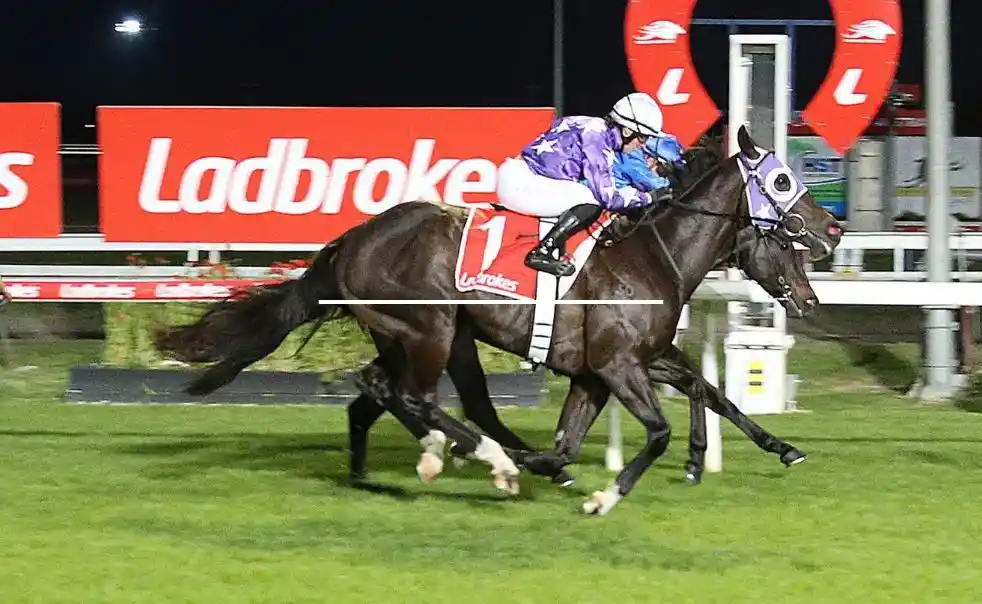
Gareth Hall has reignited debate over horse racing protest day after questioning the dismissal of Tommy Berry’s objection in Saturday’s 1100m BM78 at Randwick. The incident centred on Lyles, ridden by Zac Lloyd, and the impact of mid-race crowding on Tommy Berry’s mount, Snack Bar, trained by Bjorn Baker.
The defining moment was approximately at the 700-metre point, and it was a point of contention for Tommy Berry who stated that Lloyd changed and closed up his position, thus leaving Snack Bar to lack the necessary momentum at a crucial stage. Tommy Berry mentioned that the bumped area altered his racing line by about one and a half lengths. Although Snack Bar later had a clear run in the straight, he fell short of Lyles by a quarter of a length at the post.
Stewards dismissed the horse racing protest shortly after the race, pointing to the long run home and the opportunity Snack Bar had to make up the ground. But Gareth Hall believes the margin between the interference and the final result presented a stronger case than the panel recognised.
Speaking on SENTrack & RSN’s Giddy Up, Gareth Hall said the numbers should have carried more weight. He contended that in the event a horse goes backward more than the distance it is beaten by, the result should be in favor of the rider lodging the protest no matter the time of the occurrence.
Gareth Hall noted that stewards often hesitate to uphold objections stemming from the early or middle stages of an event. He said their position is based on the view that a horse still has time to recover, particularly when there is significant distance left to the finish. But Gareth Hall pushed back on that reasoning, pointing out that early race placement often defines the flow of the contest.
He stressed that riders work hard to gain and maintain positions, and when another horse shifts without care and disrupts that plan, the disadvantage can influence the final order. Gareth Hall maintained that the rules exist for such situations and should be applied more consistently.
The broadcaster outlined that maintaining position early helps horses settle and avoid extra work, and if that process is interrupted unlawfully, the impact can ripple through the remainder of the event. In his view, the interference to Snack Bar was substantial enough to warrant a different decision.
Gareth Hall stated that Tommy Berry’s efforts in the straight, while strong, could not completely erase what had unfolded earlier. He suggested that the one-and-a-half-length setback was clear, measurable, and ultimately more than the margin between first and second.
Trainer Wayne Hawkes, speaking during the same conversation, responded to Hall’s comments. Hawkes did not dispute the logic of Hall’s argument but aimed to clarify how officials approach cases of this type. He explained that stewards tend to weigh late-race incidents more heavily because they occur closer to the finish and present a more direct link to the final margin.
Hawkes said the panel routinely reviews footage, angles, and the degree of movement involved, and while they consider every stage of the race, incidents occurring well before the home straight require a higher threshold to overturn the result. He added that the long run from the 700 metres allows time for horses to balance up, find room and build speed again. In this instance, the stewards decided that Snack Bar had enough opportunity to make up the lost ground.
Tommy Berry’s horse racing protest was lodged promptly after the field returned, and both riders gave a detailed account of the tightening that took place. The stewards viewed the head-on and overhead angles before ruling that the interference was not severe enough to alter the finishing order.
The decision sparked reactions from punters and observers who felt the margin made the objection worthy of closer consideration. Some argued that the early-race disadvantage was far more significant than the panel acknowledged, while others supported the view that Snack Bar had sufficient time to challenge Lyles but could not get past the leader in the final stages.
The debate highlights a broader discussion within racing about how sighting, positioning, and movement should be judged in horse racing protests. Mid-race tightening is common, but determining its true impact remains a complex task for officials.
Hall’s comments may add momentum to ongoing conversations about horse racing protest standards and how much weight should be placed on early-race positioning. While the ruling will stand, the discussion has provided fresh insight into how riders, trainers, broadcasters, and officials interpret interference.
As for Tommy Berry and Baker, they will likely regroup and target another race for Snack Bar, who again showed consistency but was left wondering what might have been had the interference not disrupted his run. The conversation around the horse racing protest, however, continues to ripple through racing circles, prompting fresh reflection on how future incidents of this type might be judged.